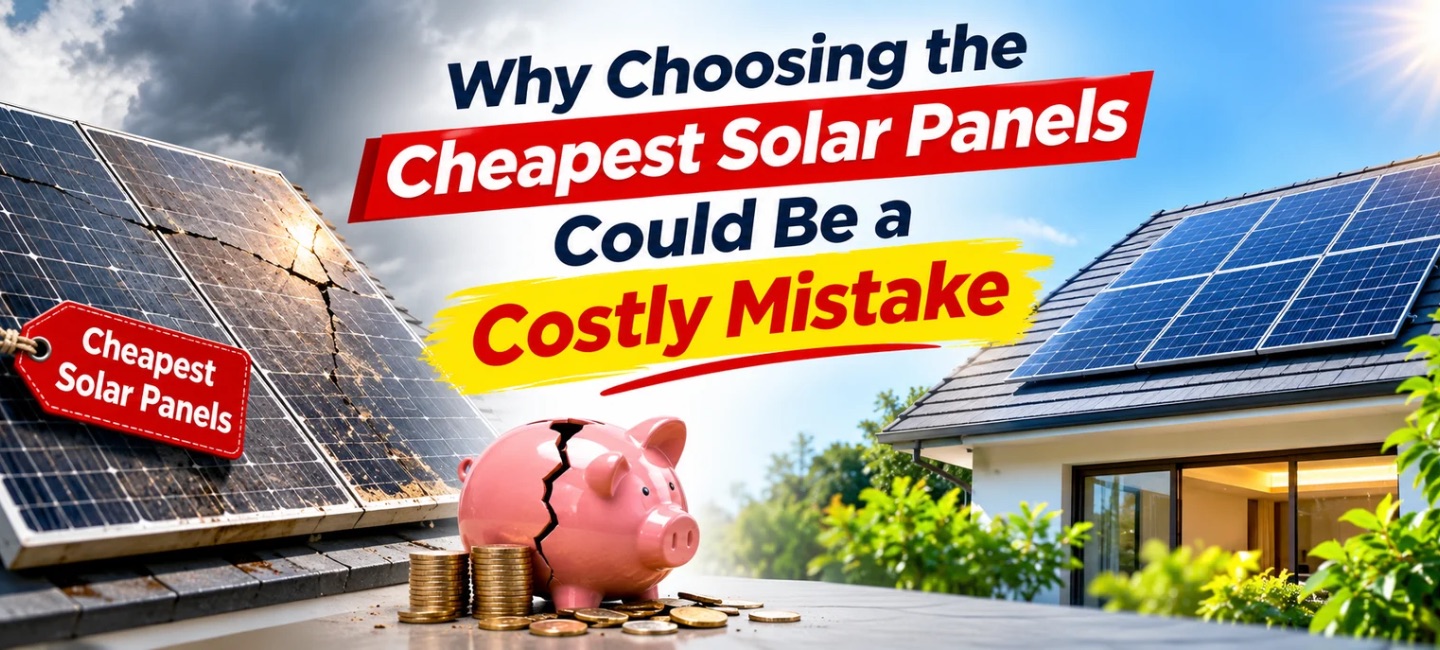
Why Choosing the Cheapest Solar Panels Could Be a Costly Mistake
When Australian homeowners start researching solar installations, one of the first things they compare is price. With electricity bills continuing to put pressure on household budgets, finding an affordable solar system can seem like the smartest financial decision.
But here's something many homeowners overlook: the cheapest solar panels are not necessarily the cheapest option in the long run.
A low-priced solar installation might look attractive initially, but poor-quality components, inadequate installation, limited warranties and disappointing energy generation can turn an affordable purchase into an expensive mistake.
Whether you're considering a 6.6kW solar system, an 8kW installation or a complete solar and battery solution, choosing the right equipment and installer is essential to protecting your investment.
So, should you always choose the cheapest solar quote? Not necessarily.
In this guide, we'll explore seven reasons why choosing the cheapest solar panels could cost you more, what homeowners should check before purchasing and how to choose a reliable solar system for your Australian home.
1. Lower Prices May Mean Compromises in Solar Panel Quality
Not all solar panels are manufactured to the same specifications. Different products can vary in efficiency, materials, manufacturing standards, durability and warranty coverage.
Some low-cost solar packages may use less established brands or equipment with limited local support. This does not mean every affordable solar panel is poor quality, but it does mean homeowners should investigate what they are purchasing.
Why Does Solar Panel Quality Matter?
Your solar panels are expected to generate electricity for many years. Their performance and durability can directly influence how much energy your household produces over time.
Before purchasing, consider the following:
- Panel efficiency: How effectively the panel converts sunlight into electricity.
- Manufacturing quality: The materials, construction and quality-control processes used.
- Temperature performance: How the panel performs under higher operating temperatures.
- Product warranty: What protection is provided against manufacturing defects.
- Performance warranty: The manufacturer's commitment regarding long-term power output.
- Manufacturer reputation: The company's history, product availability and Australian support arrangements.
Remember: A solar panel is a long-term energy investment. Saving a little on the purchase price should not mean compromising on important quality and reliability considerations.
2. Lower Efficiency Could Mean Less Electricity Generation
Solar panel efficiency is one of the important factors to consider when comparing different solar products.
Efficiency indicates how effectively a solar panel converts available sunlight into electrical energy. Higher-efficiency panels can generate more electricity from a given amount of roof space under comparable conditions.
Why Does Efficiency Matter for Australian Homes?
Roof space is limited for many residential properties. If your roof cannot accommodate a large number of solar panels, choosing efficient equipment can help maximise the available installation area.
For example, a homeowner with a relatively small roof may benefit from higher-efficiency panels that provide greater installed capacity within the available space.
However, panel efficiency alone does not determine overall system performance. Orientation, shading, temperature, inverter selection and installation quality also matter.
What Should You Compare?
| Feature | Why It Matters |
|---|---|
| Panel efficiency | Helps determine electricity generation from available roof space. |
| Power output | Indicates the panel's rated electricity capacity. |
| Temperature coefficient | Shows how output changes as panel temperature increases. |
| Performance warranty | Provides information about expected long-term output. |
| Product warranty | Covers specified product defects under warranty conditions. |
Rather than comparing panels based on price alone, evaluate their technical specifications and suitability for your property.
3. Hidden Installation Costs Can Make Cheap Solar More Expensive
One of the biggest mistakes homeowners make is comparing solar quotations without checking exactly what is included.
A quotation that appears significantly cheaper may exclude important installation requirements or additional electrical work.
What Additional Costs Should You Watch Out For?
- Switchboard upgrades: Older electrical switchboards may require modifications.
- Roof-related work: Certain roof types may require additional mounting equipment or preparation.
- Electrical upgrades: Additional cabling, protection devices or electrical work may be necessary.
- Installation access: Difficult roof access or complex building layouts can increase labour costs.
- Monitoring equipment: Check whether monitoring hardware and setup are included.
- Grid connection requirements: Applicable approvals, export arrangements and connection work should be clarified.
These expenses may not apply to every property, but understanding the complete project scope before signing a contract is important.
Pro Tip: Always request an itemised solar quotation. Compare the complete installed price rather than choosing a provider based only on the advertised package cost.
4. Cheap Solar Panels May Have Less Attractive Warranty and Support Options
A solar installation is a long-term investment, so warranty protection and after-sales support should be part of your buying decision.
Different manufacturers provide different product warranties, performance warranties and claim conditions. Some may also have more established service networks and local support arrangements than others.
Understand the Difference Between Solar Warranties
There are several types of warranties associated with a residential solar installation.
Product Warranty
A product warranty generally covers specified manufacturing defects and faults in the solar panel itself, subject to the manufacturer's terms and conditions.
Performance Warranty
A performance warranty provides a specified guarantee regarding the panel's electricity output over a defined period. Solar panels naturally experience some degradation over time, so understanding the warranty conditions is important.
Inverter Warranty
The inverter converts the electricity generated by solar panels into usable alternating-current electricity. Its warranty is separate from the solar panel warranty and should be checked carefully.
Installation Workmanship Warranty
This relates to the installation work and may cover specified workmanship defects. The provider, coverage and applicable terms should be confirmed in writing.
| Warranty Type | What It Generally Covers |
|---|---|
| Product Warranty | Specified manufacturing defects. |
| Performance Warranty | Guaranteed power output under stated conditions. |
| Inverter Warranty | Specified inverter product faults. |
| Workmanship Warranty | Specified installation-related defects. |
Before purchasing, read the actual warranty documents rather than relying only on verbal promises or advertised warranty durations.
5. Poor Installation Can Reduce Your Solar System's Performance
Even high-quality solar panels may underperform if they are not installed correctly.
Solar installation involves electrical design, roof mounting, panel positioning, weatherproofing and compliance with applicable Australian requirements.
Common Solar Installation Problems
- Incorrect panel positioning or layout.
- Inadequate consideration of roof shading.
- Improper mounting and cable management.
- Insufficient attention to roof weatherproofing.
- Incorrect inverter configuration.
- Inadequate electrical protection or documentation.
- Limited monitoring and after-sales support.
These issues can affect energy generation, safety, reliability and future maintenance requirements.
Why Is Professional Installation Important?
A qualified and appropriately accredited solar installation team should assess your roof, electricity consumption, electrical infrastructure and system requirements before recommending an installation.
They should also provide the required documentation, explain the system configuration and ensure the installation meets applicable standards and network requirements.
Good solar equipment deserves good installation. Choosing the right installer is just as important as choosing the right panels.
6. Cheap Solar Systems May Not Be Suitable for Queensland's Climate
Australia experiences different weather conditions across its regions, and solar systems should be designed with the local environment in mind.
In Cairns and North Queensland, homeowners need to consider tropical conditions such as high temperatures, humidity, heavy rainfall and severe weather.
Choosing a solar system without considering these environmental factors could create avoidable performance and maintenance problems.
What Should Cairns Homeowners Consider?
- High temperatures: Solar panel output can decrease as operating temperatures increase.
- Heavy rainfall: Mounting arrangements and roof weatherproofing need appropriate attention.
- Strong winds: The mounting system and installation design must account for applicable wind-loading requirements.
- Humidity: Suitable equipment and installation practices are important in tropical environments.
- Roof suitability: The roof's condition and structural capacity should be assessed before installation.
- Maintenance: Periodic inspections can help identify damage, debris and performance issues.
For homeowners in tropical Queensland, selecting equipment and installation methods suitable for local conditions is particularly important.
The best solar system is not simply the cheapest one available. It should be designed to suit your property's environment and energy requirements.
7. Choosing Cheap Solar Could Cost You More Over the Long Term
The real cost of a solar installation should not be measured by the initial purchase price alone.
Solar panels are intended to generate electricity over many years. Therefore, system performance, maintenance requirements, equipment warranties and installation quality all influence the overall value of your investment.
Understanding the Long-Term Cost of Solar
Imagine two homeowners installing residential solar systems.
One chooses a low-priced package based mainly on its initial cost. The other compares several quotations and selects equipment with suitable performance specifications, warranty coverage and installation support.
Although the second homeowner may pay more initially, the additional investment could provide better value if the system delivers more reliable performance and support over its operating life.
However, a higher price does not automatically guarantee better quality. Both homeowners should compare the actual equipment and installation details.
What Determines the Long-Term Value of a Solar System?
- Initial installed system cost.
- Annual electricity generation.
- Proportion of solar electricity used directly.
- Electricity tariffs and feed-in rates.
- Equipment degradation and reliability.
- Maintenance and potential repair costs.
- Warranty coverage and after-sales support.
Instead of asking which solar system is cheapest, ask which system offers the best value for your money over its expected operating life.
8. How to Choose the Best Solar Panels for Your Australian Home
Choosing solar panels does not have to be complicated. By comparing a few important specifications and installation details, homeowners can make more confident purchasing decisions.
1. Compare Established Solar Panel Brands
Research manufacturers with established product histories, suitable Australian warranty arrangements and accessible technical support.
2. Check Panel Efficiency
Compare efficiency ratings alongside panel dimensions and rated power output to understand how much capacity can fit on your roof.
3. Review Product and Performance Warranties
Understand what is covered, who handles claims and what conditions apply to warranty support.
4. Check Inverter Compatibility
The inverter should be suitable for your proposed solar array, electrical requirements and any future battery plans.
5. Compare Complete Installation Quotations
Check the full installation scope, equipment specifications, approvals, warranties and additional costs.
6. Choose a Qualified Installer
Verify the installer's relevant licences, accreditation, insurance, experience and after-sales support.
9. Cheap Solar Panels vs Quality Solar Panels: What Should You Compare?
When comparing different solar packages, it helps to evaluate the complete system rather than focusing on the panel price alone.
| Comparison Factor | What to Check Before Buying |
|---|---|
| Panel Quality | Manufacturer, construction and product specifications. |
| Efficiency | Rated efficiency and suitability for available roof space. |
| Performance | Temperature coefficient and expected output characteristics. |
| Warranty | Product, performance and inverter warranty conditions. |
| Installation | Workmanship, mounting equipment and electrical compliance. |
| Monitoring | Availability of system performance monitoring. |
| After-Sales Support | Service availability and warranty claim arrangements. |
| Total Cost | Complete installed price and any additional charges. |
Remember that the best-value solar installation is the one that meets your household's energy requirements while offering an appropriate balance of performance, reliability, cost and support.
10. Questions to Ask Before Signing a Solar Installation Contract
Before committing to a solar installation, ask your provider these important questions:
- Which solar panel brand and model will be installed?
- What is the panel efficiency and rated power output?
- What product and performance warranties are included?
- Which inverter will be supplied?
- Is the complete installation price included in the quotation?
- Are any switchboard upgrades or additional electrical works required?
- What is the estimated annual electricity generation?
- How much electricity is expected to be consumed directly by my household?
- Is the system suitable for my roof and local weather conditions?
- What after-sales support is available if something goes wrong?
Getting clear answers before installation can help you avoid misunderstandings and make a more informed purchasing decision.
Frequently Asked Questions About Cheap Solar Panels in Australia
1. Are Cheap Solar Panels Worth Buying?
Affordable solar panels can offer good value if they meet appropriate quality, performance, warranty and certification requirements. However, choosing a system based only on its low price can expose homeowners to unnecessary risks.
2. Do Expensive Solar Panels Always Perform Better?
No. A higher price does not automatically mean better performance. Compare technical specifications, independent product information, warranty conditions and installation quality before deciding.
3. What Should I Check Before Buying Solar Panels in Australia?
Check panel efficiency, rated output, product warranty, performance warranty, inverter specifications, applicable Australian approvals and the installer's credentials.
4. How Long Do Residential Solar Panels Last?
Many modern solar panels are designed to operate for 25 years or longer, although actual performance depends on the product, environmental conditions, installation quality and maintenance. Check the manufacturer's warranty for the specific product.
5. Does Solar Panel Efficiency Really Matter?
Yes. Efficiency is particularly relevant when roof space is limited. However, the complete system design, including orientation, shading, temperature and inverter performance, also affects electricity generation.
6. Can Cheap Solar Panels Work in Cairns and North Queensland?
Solar panels can be suitable for tropical Queensland, but homeowners should consider product specifications, temperature performance, mounting arrangements, applicable wind-loading requirements and installation quality.
7. Should I Choose the Cheapest Solar Installation Quote?
Not without checking what is included. Compare the complete system configuration, equipment, warranties, installation standards and additional costs before selecting a provider.
8. Is It Better to Buy Solar Panels With a Longer Warranty?
Warranty duration is important, but homeowners should also review the actual coverage, exclusions, claim process, manufacturer support and applicable performance conditions.
Conclusion: Don't Let a Cheap Solar Price Cost You More
Installing solar panels is an important investment for your home. While finding an affordable system is understandable, choosing the cheapest available package without checking its quality and installation details can lead to disappointing results.
From lower efficiency and unsuitable equipment to hidden installation costs and limited after-sales support, several factors can affect the long-term value of a residential solar system.
The smartest approach is to compare complete solar solutions, understand the equipment being offered and choose a system that suits your property's energy requirements and local conditions.
Don't choose solar based on price alone. Choose a system that delivers the right balance of quality, performance, reliability and long-term value.
Looking for Quality Solar Installation in Cairns?
At Sunny Gold Solar, we understand that every Australian home has different energy requirements. Choosing the right solar