
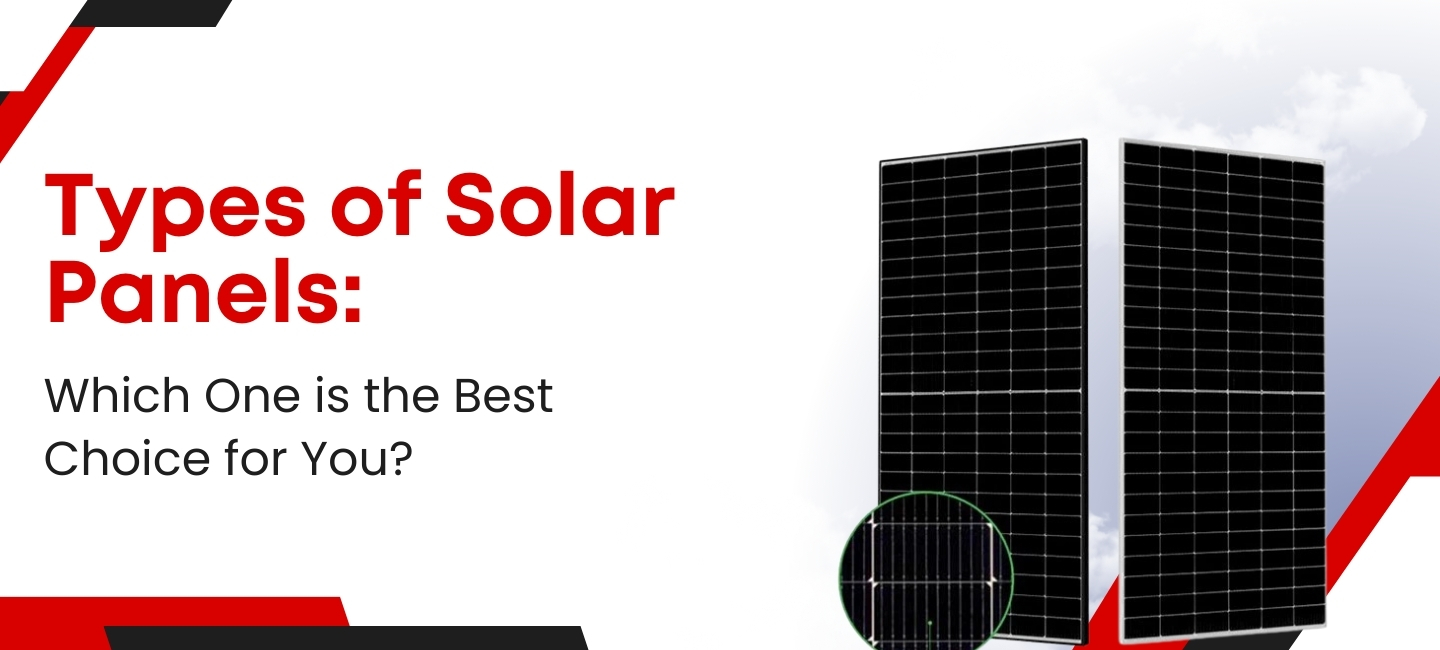
Discover How to Choose the Perfect Solar Panel for Your Home or Business - A Complete 2025 Guide
Thinking about switching to solar energy but confused by all the different types of solar panels out there? You’re not alone. With technology advancing rapidly and prices falling, choosing the right solar panel can make all the difference in your energy savings and performance.
In this in-depth guide, you’ll learn about the main types of solar panels, how they work, their pros and cons, and which one suits your home, business, or commercial property best - all explained in simple terms.
1. Introduction: Why Solar Energy Is the Future
Solar power isn’t just an eco-friendly option anymore - it’s a smart financial decision. With rising electricity costs and growing environmental awareness, millions of homeowners and businesses are turning to solar every year.
But before you invest, one question stands out:
“Which solar panel should I choose?”
The answer depends on your budget, location, space, and energy goals - and that’s exactly what we’ll explore here.
2. Understanding How Solar Panels Work
Before comparing panel types, let’s quickly understand how they function.
Solar panels are made up of solar cells, typically using silicon, which absorb sunlight and convert it into electricity through the photovoltaic (PV) effect.
Here’s a simplified flow:
Sunlight → Solar Cells → Inverter → Electricity for Your Property
Key takeaway: All solar panels work on the same basic principle, but they differ in efficiency, durability, cost, and appearance - which affects their performance and long-term value.
3. The Main Types of Solar Panels in 2025
There are three primary types of solar panels used for most homes and businesses today, along with emerging next-gen technologies worth noting. Let’s break them down.
Type 1: Monocrystalline Solar Panels (Mono-SI)
The Premium Choice for Maximum Efficiency
Monocrystalline panels, often called mono panels, are made from a single crystal structure of pure silicon. This gives them their sleek black appearance and exceptional performance.
Key Features:
- Efficiency: 18-24% (highest among all types)
- Lifespan: 25-30 years
- Cost: High, but offers the best long-term ROI
- Ideal For: Homes or businesses with limited roof space or high energy demands
Advantages:
- Excellent performance in both bright and low-light conditions
- Space-efficient: needs fewer panels for the same power output
- Long lifespan and strong warranties
Disadvantages:
- Higher upfront cost
- Slightly reduced performance in very hot climates
Pro Tip: If you’re planning for long-term solar use or have limited space, monocrystalline panels are your best bet for maximum output and durability.
Type 2: Polycrystalline Solar Panels (Poly-SI)
The Balanced Option for Cost and Efficiency
Polycrystalline panels, also known as multi-crystalline, are made from multiple silicon crystals melted together. They are recognizable by their blue, speckled surface.
Key Features:
- Efficiency: 15-18%
- Lifespan: 20-25 years
- Cost: Moderate (cheaper than monocrystalline)
- Ideal For: Larger roof spaces and moderate budgets
Advantages:
- More affordable with decent efficiency
- Durable and low-maintenance
- Environmentally friendly manufacturing process
Disadvantages:
- Slightly less efficient than monocrystalline
- Bulkier design means more roof space required
Example Scenario:
If you own a medium-sized business with a spacious rooftop and want a balance between budget and performance, polycrystalline panels are a smart choice.
Type 3: Thin-Film Solar Panels (TFSP)
The Flexible & Lightweight Option
Thin-film solar panels are made by layering photovoltaic materials (like cadmium telluride or amorphous silicon) onto glass, metal, or plastic surfaces.
These are often used for large-scale installations or non-traditional surfaces where flexibility matters.
Key Features:
- Efficiency: 10-13% (lower than crystalline types)
- Lifespan: 15-20 years
- Cost: Low - most affordable option per watt
- Ideal For: Large roofs, industrial facilities, or temporary setups
Advantages:
- Lightweight and flexible
- Performs better in high temperatures
- Easier installation and transport
Disadvantages:
- Requires more surface area
- Shorter lifespan
- Degrades faster than crystalline panels
Pro Tip: Perfect for warehouses or factories with large, flat roofs where space isn’t an issue.
4. Comparison Table: Monocrystalline vs. Polycrystalline vs. Thin-Film
| Feature | Monocrystalline | Polycrystalline | Thin-Film |
|---|---|---|---|
| Durability | 25-30 yrs | 20-25 yrs | 15-20 yrs |
| Appearance | Sleek black | Bluish | Matte black/flexible |
| For | Homes & small roofs | Large roofs | Industrial or temporary setups |
5. Emerging Technologies in Solar Panels (2025 and Beyond)
Next-Gen Innovations Changing the Solar Game
Solar energy technology is evolving fast, bringing exciting advancements that promise higher efficiency and lower costs.
1. PERC (Passivated Emitter and Rear Cell) Panels
- Enhanced efficiency (up to 25%) by capturing more sunlight.
- Now standard in premium installations.
2. Bifacial Solar Panels
- Capture sunlight from both sides, increasing energy production by 10-20%.
- Best for open areas or reflective surfaces.
3. Half-Cut Cell Panels
- Split cells reduce power loss and improve shade tolerance.
- Great for partially shaded rooftops.
4. Building-Integrated Photovoltaics (BIPV)
- Solar cells built directly into building materials like windows or facades.
- Ideal for futuristic, aesthetic-friendly designs.
6. How to Choose the Right Solar Panel for You
Factors to Consider Before Making Your Decision
Choosing the best solar panel isn’t just about picking the highest efficiency model - it’s about matching the right panel to your specific needs.
Here’s a checklist to guide your choice:
1. Budget:
- Limited budget? Go for polycrystalline or thin-film.
- Looking for long-term value? Choose monocrystalline or PERC.
2. Available Space:
- Small roof = High-efficiency panels (mono).
- Large roof = Cost-effective panels (poly/thin-film).
3. Climate:
- Hot regions = Thin-film performs better.
- Mixed climates = Monocrystalline is most consistent.
4. Aesthetic Preferences:
- Want sleek black panels? Monocrystalline.
- Don’t mind blue or matte? Polycrystalline or thin-film.
5. Energy Goals:
- For maximum power output → Monocrystalline / PERC.
- For moderate needs → Polycrystalline.
Example:
A homeowner in a hot, sunny city like Jaipur might prefer thin-film panels to handle high temperatures, while an urban business in Sydney might benefit more from high-efficiency monocrystalline units.
7. Cost Analysis & ROI Expectations
Understanding the Financial Side of Solar Panels
Let’s break down what you can expect in 2025:
| Type | Approx. Cost (per watt) | Payback Period | ROI (25 years) |
|---|---|---|---|
| Monocrystalline | $0.40–$0.50 | 4–6 years | 300–400% |
| Polycrystalline | $0.30–$0.40 | 5–7 years | 250–300% |
| Thin-Film | $0.25–$0.35 | 6–8 years | 200–250% |
Insight:
While monocrystalline panels cost more upfront, their higher efficiency and lifespan offer the best long-term returns.
8. Step-by-Step: How to Get Started
1. Energy Audit: Assess your current electricity usage.
2. Consultation: Speak with certified solar installers.
3. Panel Selection: Choose based on your energy, budget, and space needs.
4. Quotation & Financing: Explore subsidies, tax credits, and loans.
5. Installation: Schedule professional setup and inspection.
6. Monitoring: Track performance through smart solar apps.
9. The Sun Has Never Been a Smarter Investment
The solar industry has evolved far beyond its early days. Whether you’re a homeowner, school, or business owner, there’s a solar panel perfectly suited for your needs.
In 2025, with advanced technology, government incentives, and greater affordability, the question isn’t “Should I go solar?” - it’s “Which solar panel should I choose?”
And now, you know the answer