
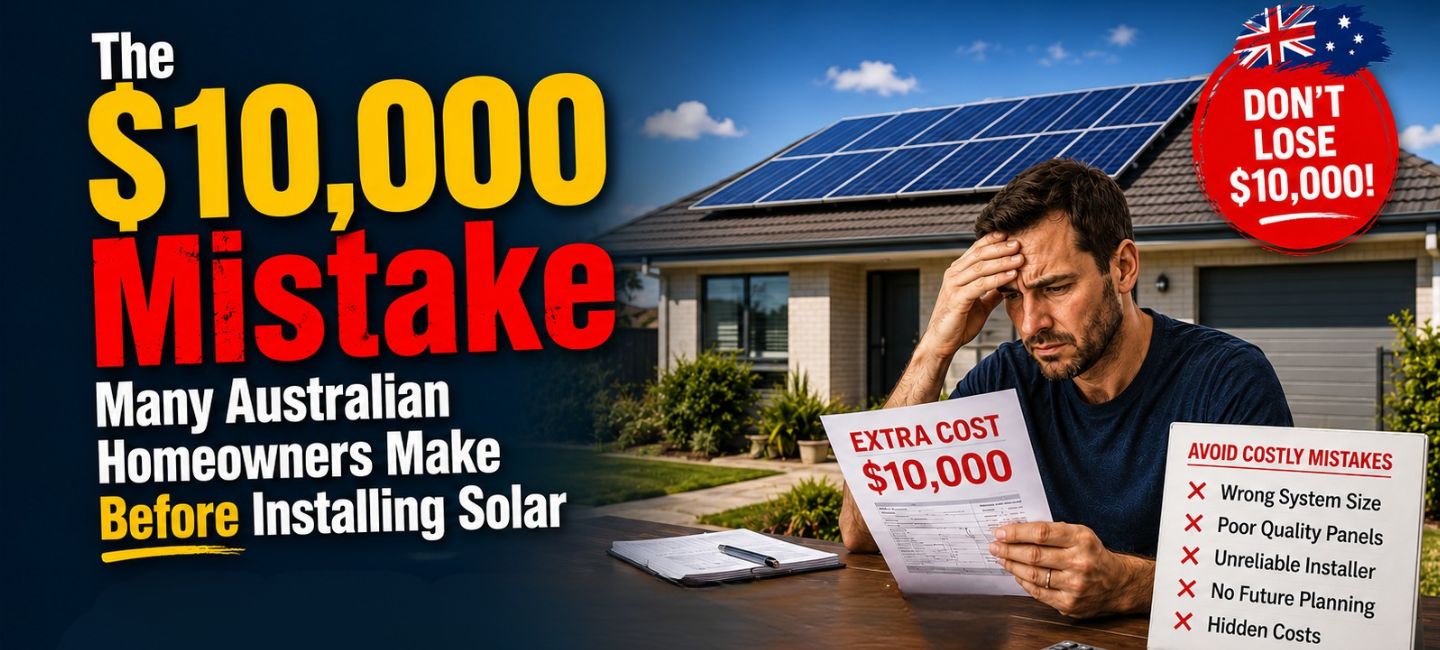
The $10,000 Mistake Many Australian Homeowners Make Before Installing Solar
Description
Electricity prices across Australia continue to rise, making solar power one of the smartest investments homeowners can make. A properly designed solar system can significantly reduce electricity bills while increasing property value and lowering carbon emissions.
However, there's one costly mistake thousands of Australians make before installing solar.
Ironically, it happens before the first solar panel is even placed on the roof.
This mistake often leads to:
- Paying far more than necessary
- Poor system performance
- Expensive upgrades
- Lower electricity savings
- Shorter equipment lifespan
- Missed government incentives
In this comprehensive guide, you'll discover exactly what this $10,000 mistake is, why so many homeowners make it, and the practical steps you can take to avoid it.
Why Solar Is Booming Across Australia
Australia has become one of the world's leading countries for residential solar adoption.
Several factors are driving this growth:
- Rising electricity prices
- Government rebates
- Improved solar technology
- Better battery storage options
- Growing environmental awareness
- Faster return on investment
For many households, solar can reduce electricity costs by 50% to 90%, depending on system size and usage habits.
But these savings only happen when the system is planned correctly.
The $10,000 Mistake Explained
The biggest mistake?
Choosing a solar system based only on the lowest price instead of long-term value.
Many homeowners compare quotes like they're buying the same product. Unfortunately, they aren't.
A $5,000 solar system and an $8,500 solar system may look similar on paper, but they can deliver dramatically different results over the next 25 years.
Choosing the wrong installer or the wrong equipment can cost homeowners well over $10,000 in lost savings, repairs, maintenance, and future upgrades.
Why Cheap Solar Often Becomes Expensive
Imagine buying the cheapest car available. It may seem like a bargain initially.
But if it constantly needs repairs, uses more fuel, and breaks down regularly, it quickly becomes the most expensive option. Solar works the same way. Cheap systems often include:
- Lower-quality panels
- Inferior inverters
- Poor installation workmanship
- Weak warranties
- Limited after-sales support
These hidden issues can reduce energy production year after year. Over 20–25 years, that difference can easily reach thousands of dollars.
Real-Life Example
Let's compare two homeowners.
Homeowner A
Purchases a $5,500 solar system because it's the cheapest quote. Problems include:
- Incorrect system sizing
- Lower efficiency panels
- Budget inverter
- Poor installation
- Frequent faults
Annual savings: Approximately $1,200
20-year savings: Around $24,000
Homeowner B
Chooses an experienced installer offering a premium-designed $8,000 system. Benefits include:
- Correct system design
- Premium panels
- High-quality inverter
- Excellent warranties
- Better monitoring
Annual savings: Approximately $1,800
20-year savings: Around $36,000
Difference:
More than $12,000 in additional savings. That's before accounting for avoided repairs and replacement costs.
Mistake #1 – Buying the Wrong System Size
Many homeowners purchase systems that are either too small or unnecessarily large. A small system may not generate enough electricity.
A system that's too large may not deliver the expected financial return if your energy usage doesn't justify it. A professional installer should analyse:
- Household electricity bills
- Roof size
- Roof orientation
- Future electricity needs
- Electric vehicle plans
- Battery plans
- Air-conditioning usage
Mistake #2 – Ignoring Roof Orientation and Shading
Solar panels don't all receive the same amount of sunlight.
Trees Nearby buildings Chimneys Satellite dishes Roof anglescan all reduce energy production.
Professional solar designers use specialised software to predict annual energy generation before installation. Skipping this assessment often leads to disappointing performance.
Mistake #3 – Choosing Panels Instead of the Entire System
Many advertisements focus only on panel brands. But panels are only one piece of the puzzle. A complete solar system includes:
- Solar panels
- Inverter
- Mounting system
- Electrical protection
- Monitoring software
- Installation quality
The inverter, often called the "brain" of the system, plays a huge role in performance. A premium inverter can improve efficiency and provide detailed monitoring for years.
Mistake #4 – Ignoring Warranty Details
Many buyers only ask: "How long is the warranty?"
A better question is: "What exactly does the warranty cover?"
Look for:- Product warranty
- Performance warranty
- Installation warranty
- Workmanship warranty
- Inverter warranty
Also ask who handles warranty claims. Some companies disappear after installation, leaving customers to deal directly with manufacturers.
Mistake #5 – Forgetting About Future Energy Needs
Think ahead. Will you:
- Buy an electric vehicle?
- Install a pool?
- Add air conditioning?
- Install a battery?
- Build an extension?
Choosing the right system today can avoid expensive upgrades later.
Mistake #6 – Not Comparing More Than Price
Instead of asking: "Who is cheapest?"
Ask:
- Who has the best reputation?
- How long have they been installing solar?
- What brands do they use?
- What reviews do customers leave?
- Do they provide after-sales support?
- Are they local?
- Can they inspect my property first?
These questions often reveal far more than price alone.
The Hidden Costs Most People Never Calculate
A poor solar decision can create hidden expenses including:
- Lower electricity savings
- Lost government incentives
- Roof repair costs
- Replacement inverter
- Reduced resale value
- Maintenance expenses
- Extra electrician visits
- System replacement years earlier than expected
When added together, these costs can easily exceed $10,000 over the system's lifetime.
How to Choose the Right Solar Installer
Use this simple checklist.
- Local experience
- Positive customer reviews
- Quality equipment
- Transparent pricing
- Clear warranties
- Professional design
- Accredited installers
- Ongoing customer support
Choosing the right installer is often more important than choosing the cheapest quote.
Questions You Should Ask Before Signing Any Solar Contract
Before committing, ask:
What size system suits my home? Which panel brands do you recommend? Why did you choose this inverter? What are my expected annual savings? Can I add a battery later? How are warranty claims handled? Do you provide monitoring? Will someone inspect my roof first? Are there any hidden costs? Who installs the system?A trustworthy installer should answer every question clearly.
The Smart Homeowner's Solar Checklist
Before installation:
- Compare multiple quotes
- Read customer reviews
- Check warranty details
- Understand expected savings
- Confirm installation timeline
- Review monitoring options
- Plan for future electricity usage
- Verify installer accreditation
- Understand maintenance requirements
- Don't rush your decision
Why Professional Advice Saves More Than Money
A quality solar consultation isn't just about selling panels. It helps homeowners understand:
- Return on investment
- Energy consumption
- Government rebates
- Battery readiness
- Future-proofing
- Long-term savings
A well-designed solar system can continue producing clean energy for 25 years or more, making proper planning one of the most valuable parts of the entire process.
Frequently Asked Questions (FAQ)
Is the cheapest solar quote always the best?
No. Lower prices can sometimes mean lower-quality components, weaker warranties, or poor installation, which may reduce long-term savings.
How long do solar panels last?
Most quality panels are designed to last 25 years or more, though performance gradually declines over time.
Should I install a battery immediately?
Not always. It depends on your electricity usage, export rates, and budget. Many homeowners install a battery later if their system is battery-ready.
How many quotes should I get?
Aim for at least three detailed quotes so you can compare equipment, warranties, system design, and installer experience—not just price.
Can solar increase home value?
Many buyers view an efficient solar system as an attractive feature, particularly when it comes with quality equipment and transferable warranties.
Final Thoughts
Installing solar is one of the smartest long-term investments an Australian homeowner can make—but only when it's done thoughtfully.
The biggest mistake isn't choosing solar. It's choosing the wrong solar solution.
Instead of focusing solely on the lowest upfront price, evaluate the total value over the life of the system. A high-quality design, reliable equipment, professional installation, and strong after-sales support can save you many thousands of dollars while delivering dependable clean energy for decades.
Take your time, ask the right questions, compare more than just price, and invest in a system that matches your home's current and future energy needs.