
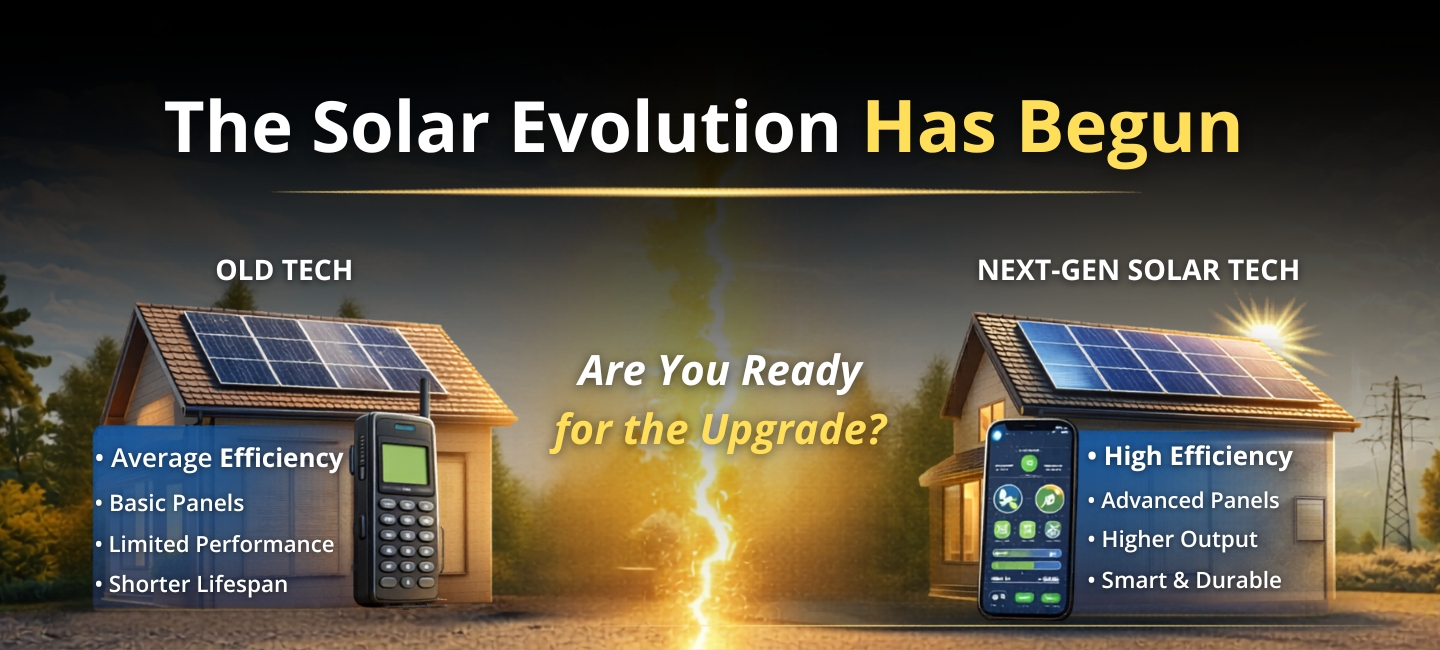
Introduction: The Solar Evolution Has Begun
Solar technology has come a long way in the past decade. What used to be bulky, average-efficiency panels are now being replaced by sleek, high-performance, and intelligent solar systems.
“Should I upgrade my current solar panels to next-gen technology?”
If you already have solar installed-or you're planning to install it-this guide will help you understand:
- What next-gen solar panels really are
- How they differ from traditional panels
- Whether upgrading is financially worth it
- How to make the smartest decision
Let’s break it down in simple terms.
What Are Next-Gen Solar Panels?
Next-generation solar panels are advanced solar technologies designed to produce more power, last longer, and perform better in all conditions.
Key Features:
- Higher energy efficiency
- Better performance in low sunlight
- Longer lifespan
- Smart monitoring capabilities
Simple Explanation:
Think of next-gen panels like upgrading from a basic phone → smartphone.
They don’t just produce electricity-they optimize it.
Types of Next-Gen Solar Panel Technologies
Understanding the types helps you make a smarter choice.
1. Monocrystalline PERC Panels
- Higher efficiency than standard panels
- Better performance in hot climates (perfect for Australia)
- More energy from less space
Best for: Homes with limited roof space
2. Bifacial Solar Panels
- Generate power from both sides
- Capture reflected sunlight (from roofs or ground)
Benefit: Up to 10–20% more energy output
3. Thin-Film Solar Panels
- Lightweight and flexible
- Less efficient but useful for large areas
Best for: Commercial use
4. Smart Solar Panels (AI-Integrated)
- Track energy production in real-time
- Optimize performance automatically
Future-ready technology
Cost vs Value - Is Upgrading Worth It?
Let’s talk about what really matters-money.
Average Upgrade Cost (Australia):
- $4,000 – $12,000 depending on system size
Benefits That Justify Cost:
1. Lower Electricity Bills
- Save up to 60–80% on bills
2. Higher Energy Output
- Generate more power daily
3. Increased Property Value
- Solar homes sell faster
4. Future-Proof Investment
- Stay ahead of rising energy prices
Key Insight:
Upgrading makes the most sense if your current system is over 7-10 years old.
When Should You Upgrade Your Solar Panels?
Not everyone needs an upgrade immediately.
You SHOULD upgrade if:
- Your panels are older than 8-10 years
- Your electricity bills are still high
- Your system is underperforming
- You want battery storage integration
You may NOT need to upgrade if:
- Your system is less than 5 years old
- Your energy needs haven’t changed
- Your panels are still efficient
Real-Life Scenario (Relatable Example)
Case Study:
A family in Australia installed solar in 2014.
- Old system output: Limited
- High evening electricity usage
After upgrading to next-gen panels + battery:
- Electricity bill reduced by 70%
- Energy independence increased
- ROI achieved within 6 years
Next-Gen Panels + Battery = Maximum Power
Upgrading panels alone is good-but combining with battery storage is game-changing.
Benefits:
- Store extra energy
- Use power at night
- Avoid peak electricity rates
This combo is the future of solar homes
Environmental Benefits - Why It Matters
Next-gen panels are not just about savings-they’re about sustainability.
Impact:
- Lower carbon emissions
- Reduced fossil fuel dependency
- Cleaner environment
Important Note:
Higher efficiency = less panels needed → less environmental impact
Smart Features That Make Next-Gen Panels Different
Modern solar systems are smarter than ever.
Features Include:
- Mobile app monitoring
- AI-based performance tracking
- Fault detection alerts
- Real-time energy insights
Why This Matters:
You’re no longer guessing-you control your energy.
How to Upgrade Your Solar System (Step-by-Step)
Step 1: Evaluate Your Current System
Check performance and age
Step 2: Analyze Energy Usage
Identify your daily consumption
Step 3: Choose Right Technology
Select panel type based on needs
Step 4: Consider Battery Storage
Maximize savings
Step 5: Hire Experts
Work with professionals like Sunny Gold Solar
Common Myths About Upgrading Solar Panels
Myth 1: Upgrading is too expensive
Reality: Long-term savings outweigh cost
Myth 2: Old panels are still enough
Reality: New panels are far more efficient
Myth 3: Technology hasn’t changed much
Reality: Solar tech has improved dramatically
Future of Solar Technology in Australia
The future is clear:
- Smarter solar systems
- Integrated battery storage
- AI-powered energy management
Homes will become self-sufficient energy hubs
Conclusion: Should You Upgrade?
Upgrade if:
- Your system is outdated
- You want higher savings
- You plan long-term
Wait if:
- Your system is still new
- Your energy needs are stable